Nanded Education Society

Poojya Swamiji

Swami Ramanand Teerth.

Ascetic, educationist, freedom fighter and leader of the Hyderabad liberation struggle — founder and inspiration behind People's College.

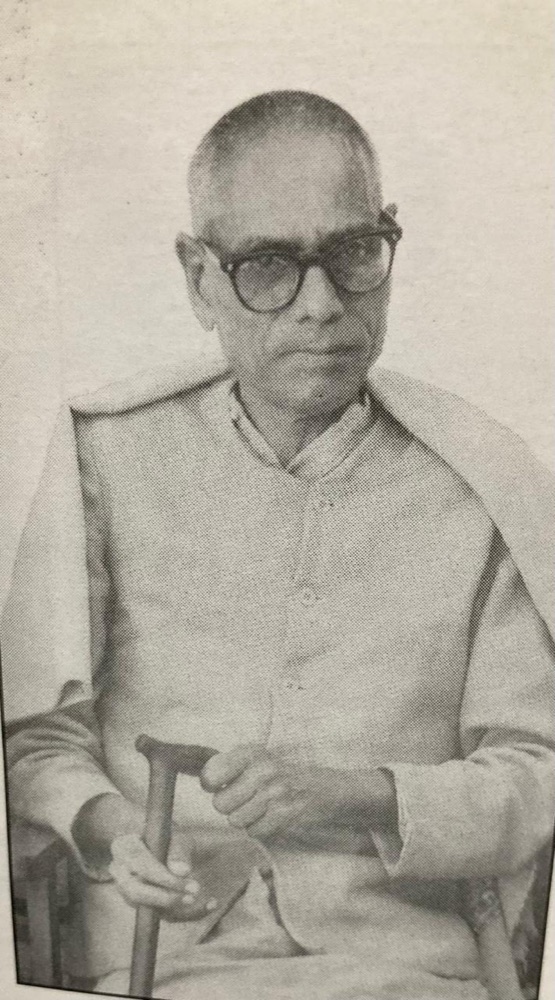
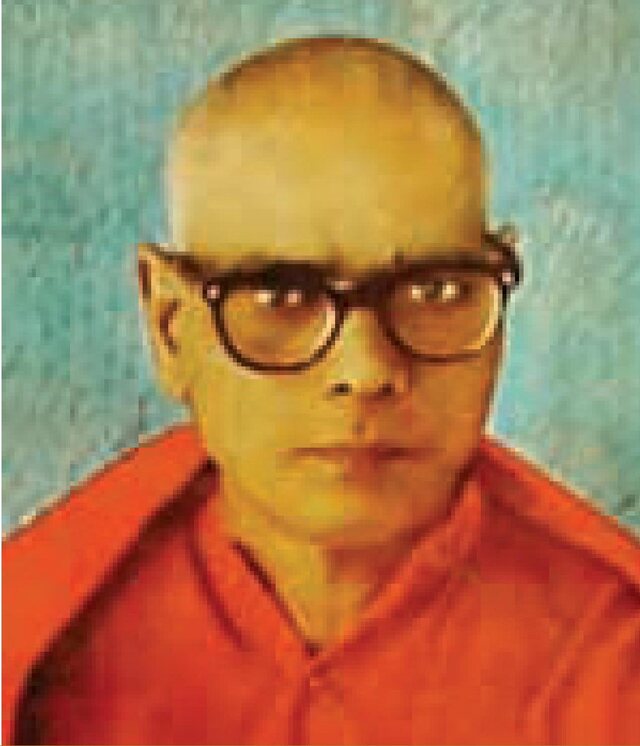
Portrait of Swami Ramanand Teerth wearing spectacles and a saffron shawl.
Poojya Swami Ramanand Teerth Image: Telangana Tejomurthulu (2017), Wikimedia Commons — CC BY-SA 4.0

Introduction

From Vyenkatesh to Swamiji.

The ascetic who dreamed of students who would carry ‘the heart of the poor’.

Born at Sindagi in Vijayapura district, Karnataka, on 3 October 1903, Vyenkatesh Bhagvanrao Khedgikar came to be known as Poojya Swami Ramanand Teerth. Sanyas, education and national service ran together through his life.

After Lokmanya Tilak's death in 1920 he vowed to give his life to the service of the country and to remain celibate. His education at Amalner and Pune led him into the labour movement; after his sanyas diksha in 1932, education became his life's work.

Taking up the leadership of the freedom struggle in the Hyderabad State in 1938, he suffered imprisonment many times. After Hyderabad's integration with India in 1948 he founded People's College at Nanded, and twice represented Marathwada in the Lok Sabha.

He is the founder and the source of inspiration behind People's College. His idea — that students should carry ‘the heart of the poor’ into every walk of life — is still alive in the college's vision and mission.

People's College, as its name shows, will try to cultivate tendencies of the service of the people among the students who will receive instructions here. They will carry with them the heart of the poor in all their activities as the citizens of free India.

Inaugural address, 26 June 1950

At a glance

Born
3 October 1903, Sindagi
Birth name
Vyenkatesh Bhagvanrao Khedgikar
Sanyas diksha at Hipparga
14 January 1932
Hyderabad liberation struggle
1938–1948
Member of the Lok Sabha (two terms)
1952–1962
Attained mahaparinirvana at Hyderabad
22 January 1972

His life

A life in time.

From birth to mahaparinirvana — a journey of education, sanyas, struggle and service.

1903–1926

Birth, childhood and education

Vyenkatesh Khedgikar grew up in Sindagi and was drawn to the national movement while still at school. His college years in Amalner and Pune gave shape to a lifelong faith in democracy and service.

  1. 3 October 1903

    Birth at Sindagi

    Born in Sindagi, Vijayapura district (then in Bombay Presidency), Karnataka. His birth name was Vyenkatesh Bhagvanrao Khedgikar.

  2. 1920

    Darshan of Mahatma Gandhi

    While listening to Lokmanya Tilak's speech at Solapur he saw Mahatma Gandhi, and found his call to national service.

  3. 1 August 1920

    A vow after Tilak's death

    Deeply moved by Tilak's death, he vowed to dedicate his life to the service of the country and to remain celibate. He finished his schooling at Sindagi, Gangapur and the Northcote High School, Solapur.

  4. 1921

    Amalner National College

    He joined the National College at Amalner, where the thought of Mahatma Gandhi, Swami Vivekananda and Swami Rama Tirtha left a lasting impression.

  5. 1923

    On to Tilak College, Pune

    Having passed the Intermediate examination at Amalner, he moved to Pune for the next stage of his education.

  6. 1925

    First in Vangmaya Visharad

    He stood first in the Vangmaya Visharad examination, wrote a dissertation on ‘the development of democracy’, and earned his postgraduate degree in Vangmaya Parangat.
1926–1937

Work, illness and sanyas

A period of labour organising, serious illness and long reflection ended with his initiation into sanyas — and a new name, a new purpose.

  1. 1926

    Entry into the labour movement

    He began work as deputy organiser for the city of Bombay, and later served as private secretary to N. M. Joshi.

  2. 1927

    Paralysis and a long confinement

    A stroke left him in hospital for eighteen months — a time he later remembered for its enforced reflection.

  3. 1929

    Teacher and headmaster at Hipparga

    He joined the national school at Hipparga in Osmanabad district as a teacher and headmaster.

  4. 14 January 1930

    Accepting the ascetic life

    Swamiji formally accepted the life of a sanyasi.

  5. 5 May 1931

    Learning about Swami Rama Tirtha

    From Narayan Swami he learnt more about Swami Rama Tirtha and the life of the sanyasi.

  6. 14 January 1932

    Sanyas diksha at Hipparga

    At Hipparga, Narayan Swami initiated him into sanyas for the service of the people. He took the name ‘Swami Ramanand Teerth’.

  7. March 1935

    The national school at Hipparga

    He took charge of the national school at Hipparga.

  8. 5 May 1935

    Shri Yogeshwari Nutan Vidyalaya

    He founded Shri Yogeshwari Nutan Vidyalaya, a high school at Ambajogai, and became its headmaster.

  9. 1–3 June 1937

    Maharashtra Parishad at Partur

    He attended the Maharashtra Parishad session at Partur.

1938–1948

The Hyderabad liberation struggle

As leader of the Hyderabad State Congress, Swamiji turned the demand for civil rights and responsible government into a mass movement — and paid for it with repeated imprisonment.

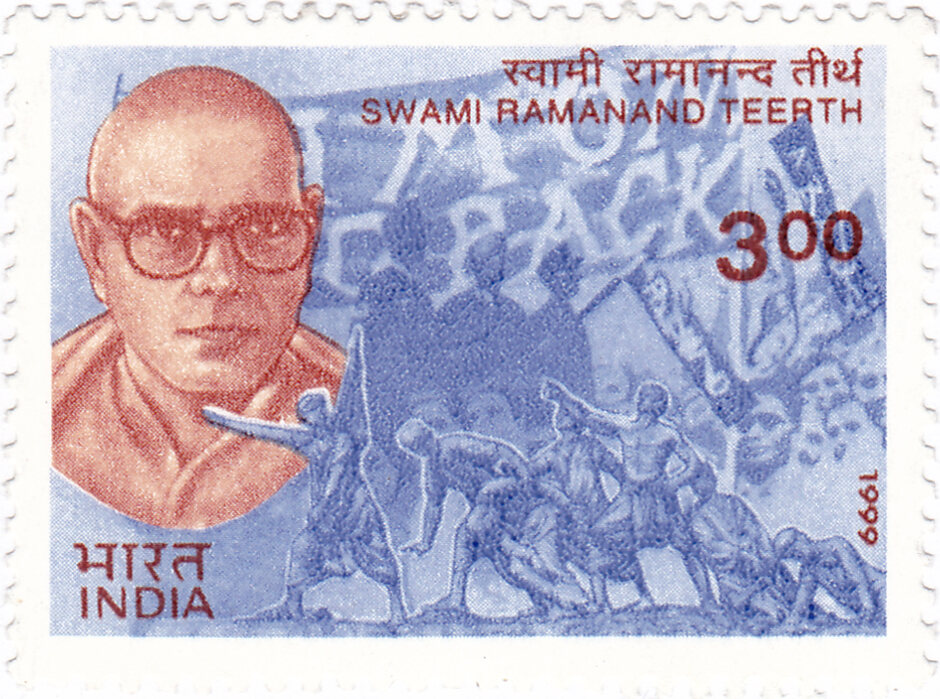
The 1999 commemorative postage stamp of India showing Swami Ramanand Teerth and the freedom struggle.
Commemorative postage stamp, India Post, 1999
  1. June 1938

    Secretary of the Maharashtra Parishad

    At the Parishad session in Latur he accepted the post of secretary of its ad-hoc committee.

  2. 9 June 1938

    To Hyderabad

    He left for Hyderabad and became a member of the Hyderabad State Congress.

  3. 27 October 1938

    Satyagraha at Putlibawdi

    With four companions he led the second batch of the State Congress satyagraha near Putlibawdi. The Nizam's government arrested him and imposed a sentence.

  4. 14 November 1938

    The Vande Mataram movement

    The Vande Mataram movement began in the Hyderabad State.

  5. 10 April 1939

    Released from prison

    Swamiji was released from custody.

  6. 1940

    A demand to lift the ban

    He wrote to the Nizam's government asking that the ban on the State Congress be lifted.

  7. 11 September 1940

    Arrested again

    He was arrested once more, imprisoned and later released.

  8. 8 August 1942

    ‘Do or die’

    After Gandhi's ‘Do or die’ message to India, the Nizam's police arrested Swamiji at Nampally station.

  9. December 1943

    Released

    Swamiji was released from prison.

  10. 10 June 1946

    All India Praja Parishad, Delhi

    He attended the meeting of the standing committee of the All India Praja Parishad in Delhi.

  11. 3 July 1946

    The State transfer lifted

    The Nizam's government withdrew the State transfer order.

  12. 19 July 1946

    The first public meeting

    The first public meeting of the movement was held at Hyderabad.

  13. 21 October 1946

    The killing of Govind Pansare

    Govind Pansare, a worker of the State Congress, was killed.

  14. 16–19 June 1947

    The first State Congress session

    The first session of the Hyderabad State Congress was held at Hyderabad.

  15. 15 August 1947

    Arrest on the eve of independence

    India became independent, but Hyderabad and Kashmir remained under their rulers. On the eve of independence Swamiji and his colleagues were arrested.

  16. 29 November 1947

    The standstill agreement

    The Government of India and the Nizam's government signed a standstill agreement.

  17. 30 November 1947

    Released from jail

    Swamiji and his colleagues were released from prison.

  18. 1948

    A letter, and an arrest

    Swamiji wrote to the Nizam. In reply, the government arrested him on 26 January 1948.

  19. 30 January 1948

    The assassination of Gandhiji

    The murder of Mahatma Gandhi left Swamiji in deep sorrow.

  20. 14 April 1948

    The death of Bhimsen Desai

    Razakar mobs attacked satyagrahis in the jail. Bhimsen Desai was killed and many were injured.

  21. 13–17 September 1948

    Police action in Hyderabad

    The Government of India launched a police action in the Hyderabad State.

  22. 17 September 1948

    Hyderabad is freed

    The Nizam's government surrendered, the State was freed, and Swamiji was released from prison.

  23. 24 November 1949

    The Constitution comes into force

    The Constitution of India came into force in the Hyderabad State.

1950–1962

Education, public service and Parliament

After integration, Swamiji gave himself to building institutions — schools, a college, a university — and to representing the region in the first two Lok Sabhas.

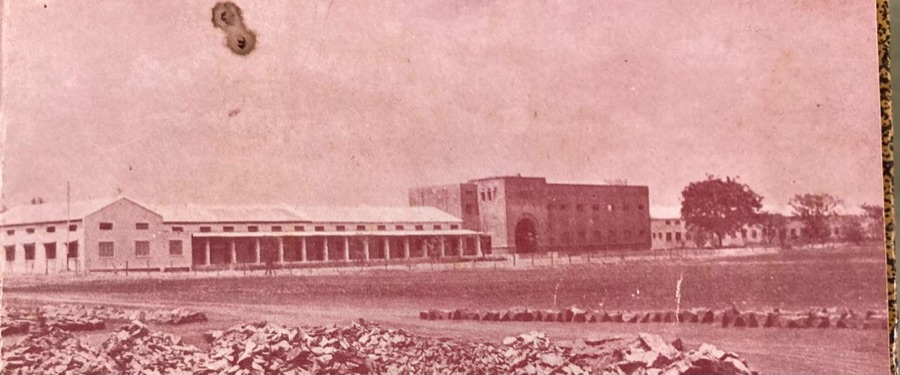
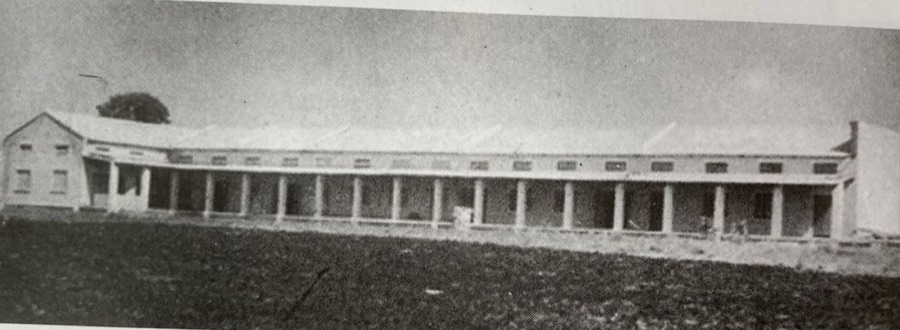
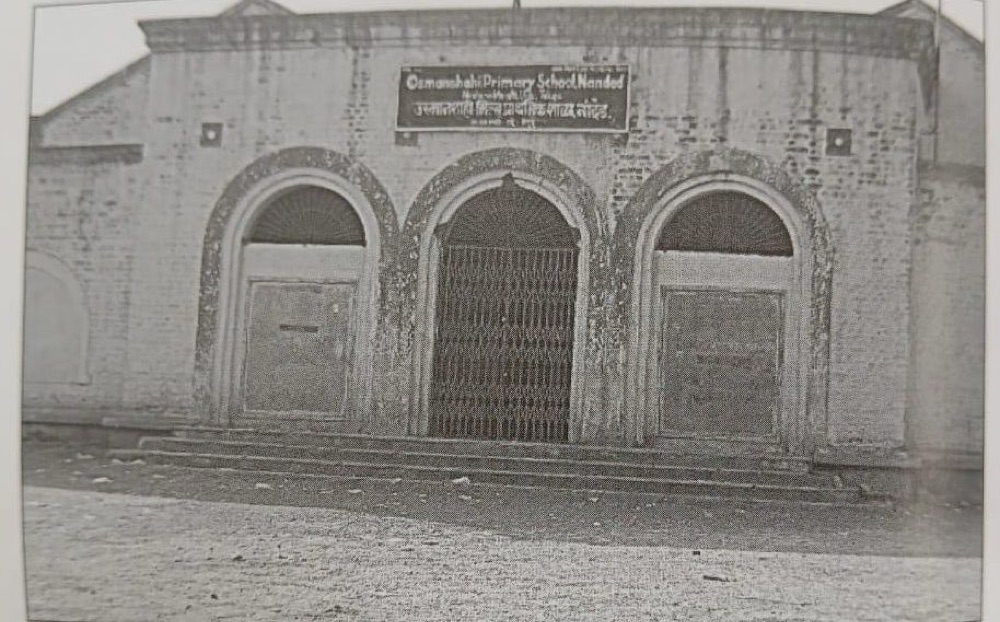
The Osman Shahi Primary School building in Nanded, where People's College held its first classes.
Osman Shahi Primary School, Nanded — the college's first building, 1950
  1. 26 June 1950

    People's College is founded

    Nanded Education Society founded People's College at Nanded — the first college in Marathwada — with Swamiji as its guiding force.

  2. 1951

    Khadi and Bhoodan

    He founded the Hyderabad Khadi Committee, and later helped start the Bhoodan movement in Marathwada with Vinoba Bhave.

  3. 1952

    Elected to the first Lok Sabha

    In independent India's first general election he won from the Gulbarga constituency and went to the Lok Sabha as a Member of Parliament.

  4. 16–18 January 1953

    A clear stand before Nehru

    At the All India Congress session at Nanalnagar, Hyderabad, he argued clearly before Nehru for the trifurcation of Hyderabad and for states organised on a linguistic basis.

  5. 1953

    People's High School

    People's High School was established at Nanded.

  6. 1954

    Leaving the State Congress

    Swamiji gave up the leadership of the State Congress for good.

  7. June 1955

    Technical school at Latur

    On Swamiji's initiative a technical education school was founded at Latur.

  8. 1956

    Hyderabad is trifurcated

    The Hyderabad State was divided into three, and its parts merged with the neighbouring linguistic states.

  9. 29 June 1956

    Yogeshwari College, Ambajogai

    Yogeshwari College was founded at Ambajogai under the Shri Yogeshwari Shikshan Sanstha.

  10. 1957

    A second term in the Lok Sabha

    He won from the Aurangabad constituency and returned to the Lok Sabha for a second term.

  11. 1958

    Marathwada University

    Marathwada University was established, with a significant contribution from Swamiji.

  12. 1 May 1960

    United Maharashtra

    The State of Maharashtra was formed, a cause to which Swamiji made an important contribution.

  13. 5 May 1960

    Yogeshwari Sanstha's silver jubilee

    The Shri Yogeshwari Shikshan Sanstha entered its silver jubilee year.

  14. 1962

    Retirement from politics

    Swamiji retired from active politics.

1962–1972

Reflection, honour and the final years

He withdrew from public life and settled at Shanti Ashram, where he spent his last years in spiritual reflection. A doctorate and a national commemorative stamp followed.

Swami Ramanand Teerth in later life, seated with a walking stick.
Swamiji in his final years
  1. 1963

    Honoured on his sixtieth birthday

    On the occasion of his sixtieth birthday Swamiji was honoured at several places.

  2. August 1964

    At Shanti Ashram

    He visited Shanti Ashram near Chintalur in Andhra Pradesh, founded by Omkar Swami, and stayed on there permanently.

  3. 21 January 1966

    Rama Tirtha Shanti Mahavidyalaya

    At the Shanti Ashram branch in East Godavari, Swamiji established Rama Tirtha Shanti Mahavidyalaya.

  4. 1970

    Doctor of Letters

    Marathwada University honoured him with the degree of Doctor of Letters (D.Litt.).

  5. 22 January 1972

    Mahaparinirvana

    Poojya Swamiji passed away at Hyderabad. His mortal remains rest at the Swami Ramananda Teerth Memorial at Brahmanvada, Begumpet.

This chronology follows the brief life-chronicle of Swamiji supplied by the college, with additional detail from the English Wikipedia article.

Admissions

Your next step at People's College.

Admission to the senior college follows the annual schedule announced by the college and SRTMUN. Contact the college office for eligibility, fees and documents.